


The Voice of Hind Rajab
The Silence of Truth, it Screams Louder than Popaganda.

When violence and injustice are not shouted out on social media, it is easier to feel less immediate shock—but the emotional weight lingers, and when the credits roll, the tears remind you of the painful contrast between screen and reality.
Watching “The Voice of Hind Rajad” did not leave me in sorrow—it left me furious. Furious because this is a true story, one of many.
Furious because I was sitting in a comfortable cinema seat, witnessing the mechanics of genocide. Furious because, in that moment, I felt like a hollow supporter, complicit in silence.

Director Kaouther Ben Hania presents the horror of war and genocide with no sensationalism, much like the documentary “No Other Land”—directed by Basel Adra, Hamdan Ballal, Yuval Abraham, and Rachel Szor—did in 2024.
Yet here the focus is the brutal death of a five-year-old girl, Hind Rajad (Hamood), whose life might have been spared if military blockades and bureaucratic indifference had not made rescue impossible.
Her fate was sealed the moment her family’s car was shelled by Israeli forces on 29 January 2024 during the Gaza invasion.
Trapped and terrified in a car surrounded by dead bodies, Hind spent her final hours desperately phoning volunteers at the Palestine Red Crescent Society, pleading for help and an ambulance that never arrived.
From Hind’s final hours, the film pivots to form—asking how horror can be shown without exploitation.

Ben Hania’s visual approach emphasizes the suffocating tension: the use of natural lighting inside the call centre sets a claustrophobic, clinical tone.
The camera often favors close-ups of the actors, blending static frames with restless handheld shots, creating an uneasy docu-drama.
A particularly striking choice is the use of blurred actors in the background as the lens focuses on phones—where real footage of the Red Crescent team during the rescue intervention is revealed.
This interplay between fiction and reality gradually dissolves until only the unbearable destiny remains.
The heart of the film is Hind’s voice. The real recordings of her repeated calls to Red Crescent workers Rana (Saja Kilani), Omar (Mataz Malhees), and Nisreen (Clara Khoury), alongside their steady supervisor Mahdi (Amer Hlehel), provide an agonizing backbone to its narrative.
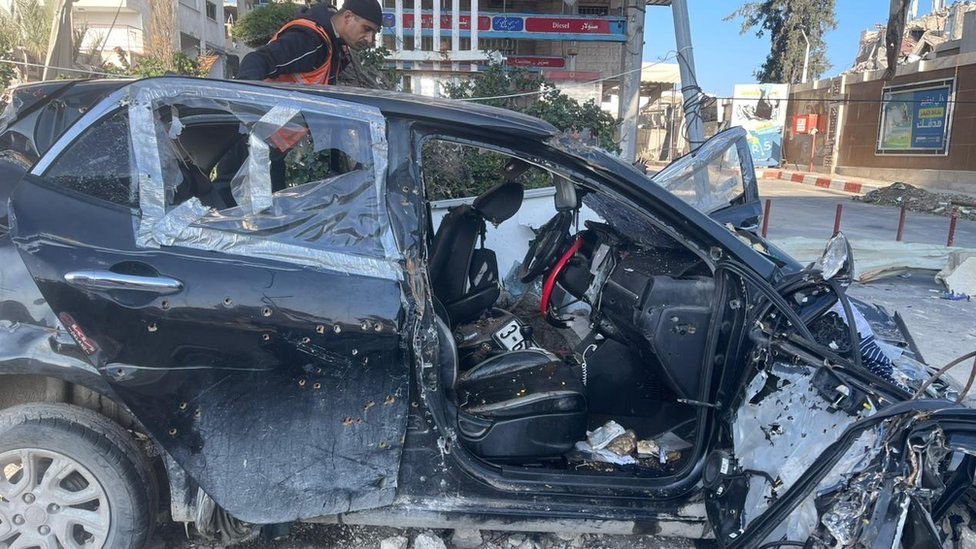
For a second, a fleeting feeling of relief and hope suggests things might possibly have a happy ending—but the outcome is already written, and we are forced to confront it.
“The Voice of Hind Rajad” ’s silence, its refusal to dramatise what needs no embellishment, lands heavier than any image circulated online.
On social media, it is easier to share brutal videos/images and write provocative captions than to offer genuine statements of real information.
Viral images earn clicks, but films like this—projects that demand funding, patience, and empathy—struggle to cut through. Bombs hit the like counter; truth struggles to be believed.

In a world filled with propaganda and misinformation about the genocide in Gaza, we must remember that this massacre extends beyond the strip.
“The Voice of Hind Rajad” speaks with radical honesty. Its filmmaking is unflinching, its consequences devastating, and its moral force impossible to ignore.


Comments